

How to check if a solenoid valve is good or bad?
The quality of a solenoid valve mainly depends on two aspects: the coil and the valve body. Therefore, testing should primarily focus on these two aspects. A multimeter can be used to check the coil.
| Step | Operation | Purpose |
|---|---|---|
| 1 | With the solenoid valve energized, unplug it and use a multimeter to check for voltage. | To verify the presence of electrical power. |
| 2 | With the solenoid valve energized, bring a thin steel wire close to the coil. | To check if the coil is generating a magnetic field. |
| 3 | Repeatedly energize and de-energize the solenoid valve. Use a very fine Allen key to probe the small, brass-colored indentation on the valve's shaft. | To check if the valve core (plunger) is moving freely. |
Inspection method
First, connect the controlled medium (pressurized liquid or gas <air>, with the pressure value being the midpoint of the solenoid valve's operating pressure range) to the solenoid valve. Then, energize the solenoid valve coil. If the controlled medium changes state from on to off or from off to on, the solenoid valve is good; otherwise, it is faulty.
Common Faults and Troubleshooting Methods for Solenoid Valves
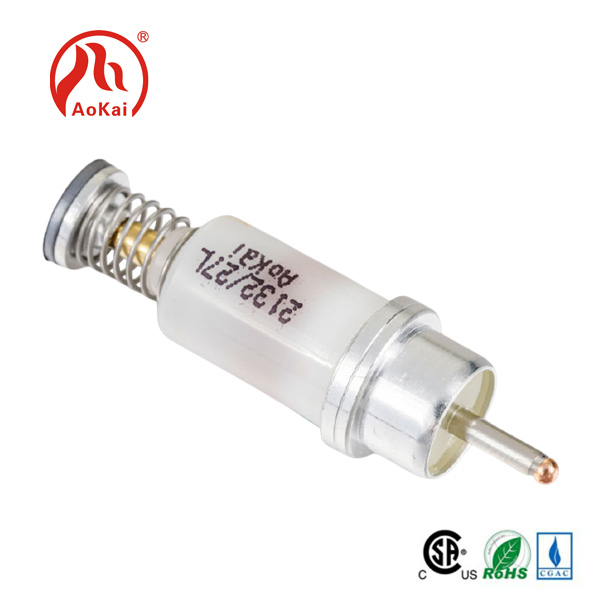
1. Coil short circuit or open circuit:
Testing method: First, use a multimeter to measure the continuity. If the resistance value approaches zero or infinity, it indicates a short circuit or open circuit in the coil. If the resistance value is normal, it does not necessarily mean the coil is good. Please perform the following final test: Place a small screwdriver near the metal rod passing through the solenoid valve coil, then energize the solenoid valve. If you feel magnetism, the solenoid valve coil is good; otherwise, it is faulty.
Solution: Replace the solenoid valve coil.
2. Plug/Socket Problem
Symptom: If the solenoid valve has a plug/socket, the problem might be due to a faulty metal spring in the socket or incorrect wiring on the plug, preventing power from reaching the coil. It's best to develop the habit of tightening the fixing screw after plugging the plug into the socket, and tightening the fixing nut on the coil after the valve stem.
If the solenoid valve coil plug has an LED power indicator, it must be connected correctly when using DC power to drive the solenoid valve; otherwise, the indicator will not light up. Also, do not interchange power plugs with LED power indicators of different voltage levels, as this will burn out the LED/cause a short circuit (use a lower voltage plug) or result in a very weak LED light (use a higher voltage plug).
If there is no power indicator, the solenoid valve coil does not need to distinguish polarity. This applies to transistor time relays with DC coil voltage and intermediate relays with a diode/resistor leakage circuit connected in parallel to the coil.
Solution: Correct the wiring error; repair or replace the plug and socket.
3. Valve Core Issue
Symptom: When the pressure of the medium flowing through the solenoid valve is normal, pressing the red manual button on the solenoid valve results in no response, indicating that the valve core is definitely faulty.
Solution: Check for problems with the medium, such as excessive water accumulation in the compressed air or impurities in the flowing liquid. Then, remove any water or impurities from the solenoid valve and pipeline.